Skip to main content
Menu
Get Involved
Give
Contact
Ask Extension
About
Leadership
UMD Extension Impact
Careers
Directory
Civil Rights Compliance
Extension Advisory Council and Committees
Program and Organizational Development
Resources
Animal Agriculture
Plant Agriculture
Yard & Garden
Pests
Natural Resources
Environment & Energy
Agribusiness Management
Food & Nutrition
Health & Well-Being
4-H & Youth Education
Programs
4-H Youth Development
Family & Consumer Sciences
Agriculture & Food Systems
Environment & Natural Resources
Home & Garden Information Center
Locations
Publications
News & Events
All News
Events
Invasive Plants or Trees
Home
Resources
Invasive Plants or Trees
For full functionality of this site it is necessary to enable JavaScript. Here are
instructions for how to enable JavaScript in your web browser
.
Sort by:
Date
Title
Updated: February 24, 2025
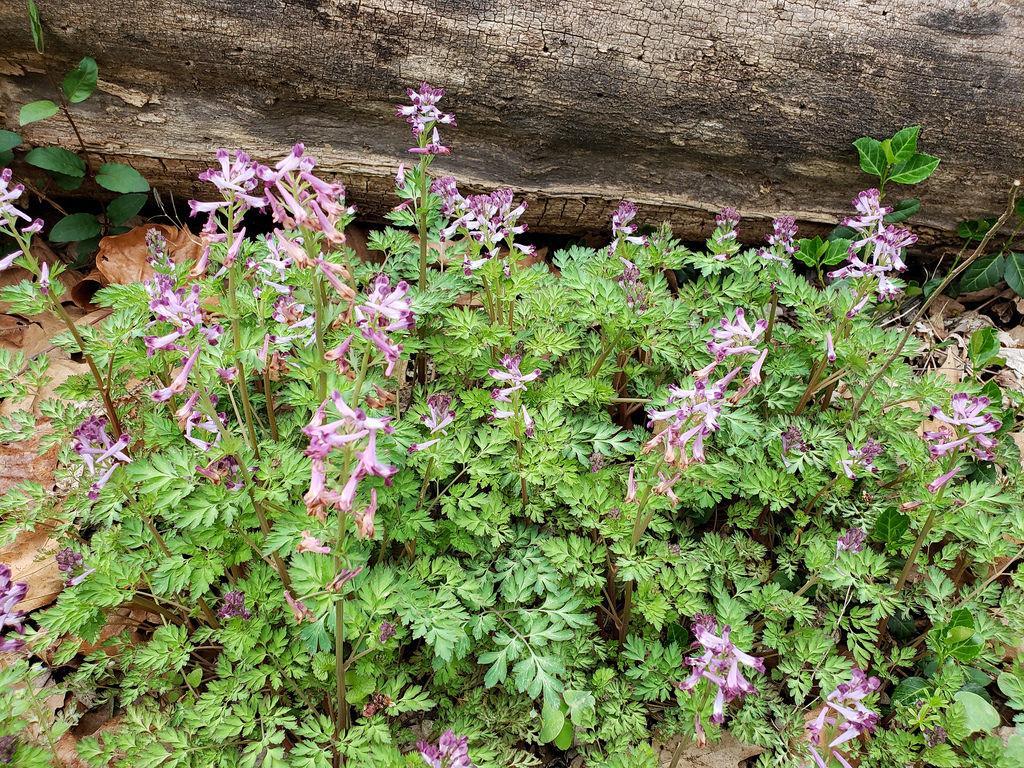
Invasives in Your Woodland: Incised Fumewort
The term “Incised fumewort” may not be familiar to many readers of this column, as this plant is a relatively new arrival to North America. It was first identified in the US only in 2005. Since then, new populations have been identified in Pennsylvania, Maryland, District of Columbia, Virginia, North Carolina, and as far west as Tennessee and Illinois.
Updated: February 24, 2025
From a Mountaintop, UMD Alum Encounters Toxin-Emitting Olive Bushes, Smothering Vines and the Imperfection of Conservation
Paula Whyman ʼ87 and her husband bought 200 acres on a peak in the Blue Ridge Mountains, where she undertook the daunting task of clearing invasive plants and encouraging native plant life on this long gone-to-seed cow pasture and orchard—an experiment she's written about in her new book, “Bad Naturalist: One Woman's Ecological Education on a Wild Virginia Mountaintop.”
Updated: November 25, 2024
Invasives in Your Woodland: Osage-orange
Regular readers of this feature will note that the vast majority of species highlighted here are not native to North America. This issue, however, looks at a Osage-orange, a species that is both native to North America and that has been introduced to new environments in such numbers that it is considered invasive in many areas.
Updated: November 25, 2024
Branching Out Fall 2024 News and Notes
In the News and Notes roundup for this issue: The tree nurseries in Maryland & Virginia are now taking orders for spring planting projects; the Old Growth Forest Network has a new site; the Virginia Department of Conservation and Recreation has new species on its invasives roster; and the growth of food forests may help both ecosystems and people.
Updated: November 21, 2024
Branching Out - Summer 2024
In this issue: Read about the how new and old can make a positive mix, and the importance of conserving existing forest buffers. Our two popular online courses return for the fall. Our "Native Trees of Maryland" looks at the red maple, and "Invasives in Your Woodlands" looks at Japanese hop. And don't forget the events calendar and the Brain Tickler challenge.
Updated: November 5, 2024
Branching Out - Fall 2022
Read about a bunch of stuff I ain't writ yet. There's also the News and Notes summary about stories you might have missed, as well as our regular features the Woodland Wildlife Spotlight, Invasives in Your Woodland, and the Brain Tickler challenge.
Updated: October 24, 2024
Invasives in Your Woodland: Canada Thistle
Canada Thistle is also known as creeping thistle, as well as green or perennial thistle, depending on the source. Others express their opinion about it by calling it hard thistle and cursed thistle. Canada thistle is an aggressive and colonial perennial, with both male and female plants. It is considered a noxious weed in Maryland and many other areas across the U.S.
Updated: October 23, 2024
Branching Out - Winter 2023
In this issue: Help us learn more about our readers and subscribers by taking our short survey. Read about a potential ally in the fight against hemlock wooly adelgid, and how Marylanders can get a rebate for planting native trees. There's information about our spring session of "The Woods in Your Backyard" online course, plus our regular features: the "Woodland Wildlife Spotlight" looks at the American beaver and "Invasives in Your Woodlands" looks at Princess tree. And don't forget the events calendar and the Brain Tickler challenge.
Updated: October 23, 2024
Forest Pests: Spotted Lanternfly
The spotted lanternfly (SLF) is a colorful non-native, invasive pest native to Asia that was first detected in the United States in 2014 in Berks County, Pennsylvania. In addition to Pennsylvania, it has been confirmed in Maryland, Delaware, New Jersey, West Virginia, and Virginia. In Maryland, Cecil and Harford Counties are under a quarantine. The first instar hatch was recorded in Cecil County in May 2020.
Updated: October 23, 2024
Branching Out - Spring 2021
There's news about our new website, as part of the University of Maryland Extension's rebranding efforts. There's also information about the Spotted Lanternfly and about the rebounding forestry industry in Maryland. Our regular features include profiles of the striped skunk in the "Woodland Wildlife Spotlight" and lesser celandine in "Invasives in Your Woodland," as well as our events calendar and the Brain Tickler challenge. Plus, tidbits you may have missed, in the News and Notes section.
First
Previous
Page
1
Page
2
Page
3
Current page
4
Page
5
Page
6
Page
7
Page
8
Next
Last